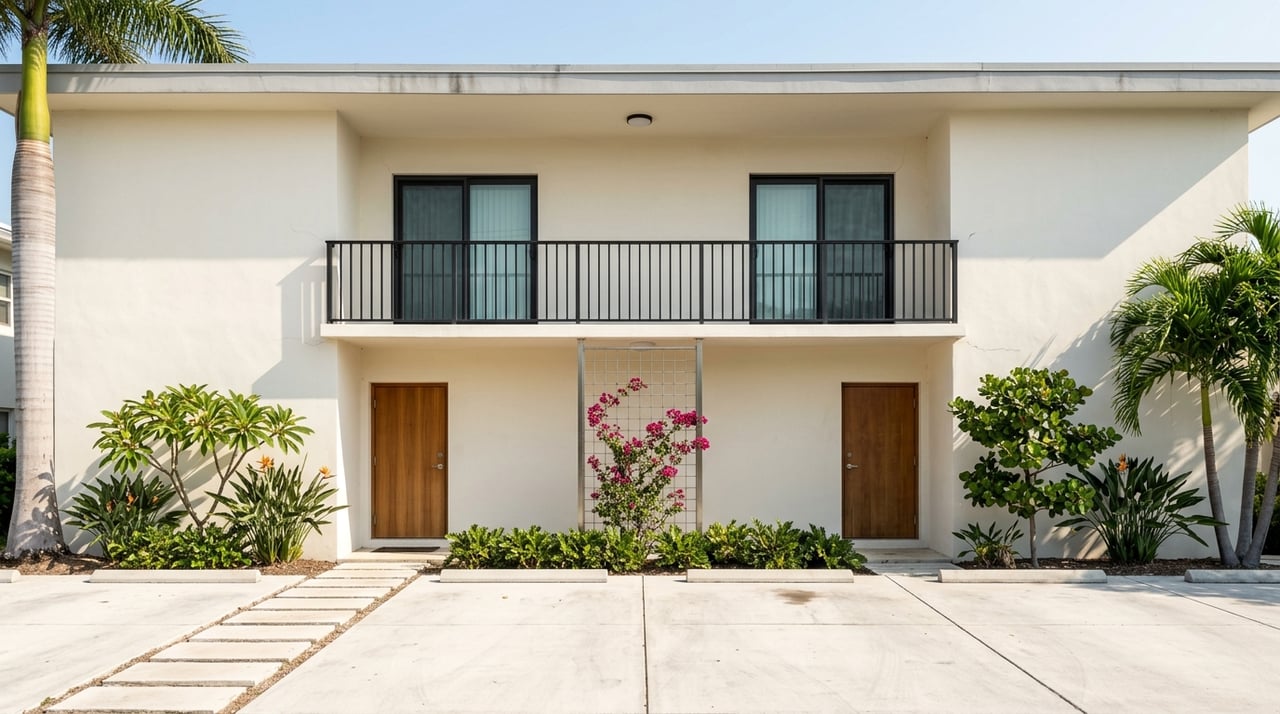
If you are looking at a small multifamily property in South Miami, it is easy to get distracted by headline pricing, strong demand, or a promising rent number. But in a compact, high-value market like this one, a good deal often comes down to the details hidden below the surface. This guide walks you through how to evaluate small multifamily opportunities in South Miami with a sharper lens, so you can underwrite more confidently and avoid costly surprises. Let’s dive in.
South Miami market context
South Miami is a small city with about 13,207 residents spread across just 2.27 square miles. That limited footprint matters because it creates a built-out environment where available land is scarce and property values can remain elevated.
The city’s 2020 to 2024 median household income was $94,507, with a median gross rent of $1,764 and a median owner-occupied home value of $829,400. Compared with Miami-Dade County, South Miami stands out as a higher-value submarket, which means you should be careful about assuming rents and land values will rise at the same pace.
Miami-Dade property appraiser data also showed South Miami taxable values reaching $3.06 billion for 2025, up 7.8% from the prior preliminary figure. That points to continued value resilience, even as pricing remains high and underwriting has to stay disciplined.
Why small multifamily deals require precision
In a market like South Miami, there is less room for loose assumptions. A small error in rents, expenses, or legal use can materially change your returns because acquisition costs are already elevated.
Broader Miami rental conditions also reinforce that point. January 2026 market-area data showed mixed conditions, including softer upper-tier rents, occupancy in the mid-90s for lower-tier product, and a large pipeline of multifamily units under construction. For you, the takeaway is simple: underwrite the asset in front of you, not the broader market story.
Confirm the property type first
A small multifamily deal is not just about unit count. In South Miami, the city’s comprehensive plan contemplates Duplex Residential, Townhouse Residential, and Multi-Family Residential categories, and each one points to a different use pattern and development framework.
For example, duplex residential is intended for two dwelling units per parcel with direct at-grade access. Townhouse residential is intended for townhouse-type units on parcels of at least 10,000 square feet, while multi-family residential is designed for up to 24 dwelling units per net acre with pedestrian- and transit-oriented features.
That means your first question should not be, “Is this a duplex or fourplex?” It should be, “What land-use and zoning rules govern this parcel today?”
Check the zoning map, not the listing
South Miami’s Transit-Supportive Development District near the Metrorail station follows different rules from other parts of the city. In that district, single-family residences and two-family duplexes are not permitted because the area is intended for denser, mixed-use, transit-supportive development.
This is why every parcel deserves an individual review against the current city zoning map. A listing description, broker remark, or older zoning snapshot is not enough to support an investment decision.
Verify actual conditions on site
The city notes that its zoning and flood maps are generalized GIS products and may be revised over time. In practice, you should pair map review with title work, a survey, and a site visit.
That physical review should confirm the actual unit count, parking layout, additions, and whether there may be nonconforming-use issues. If the property does not match the paperwork, your risk profile changes immediately.
Review the rent roll line by line
A current rent roll is one of the most important documents in small multifamily underwriting. It gives you unit-level income data, but it only helps if the numbers are accurate and complete.
Fannie Mae guidance treats the rent roll as standardized unit-level information for acquisition review, and its fraud-prevention guidance flags incomplete rent rolls, mismatches between reported occupancy and observed occupancy, and unusual month-to-month patterns as warning signs. That makes verification essential.
Match the paperwork to the property
Do not accept the rent roll at face value. Compare it to the physical property, the current leases, and what you see during inspection.
If a building appears fully occupied but the rent roll shows concessions, gaps, or inconsistent lease terms, that deserves more scrutiny. The same is true if unit counts, bedroom counts, or rental rates do not line up across documents.
Ask for trailing operating statements
Along with the rent roll, ask for trailing operating statements and tax bill history before modeling the deal. A clean underwriting file starts with understanding what the property has actually collected and spent, not what the seller hopes it will do next.
For small assets, even a few irregular expenses can distort the picture. That is why you want enough operating history to separate one-time items from recurring costs.
Focus on NOI and cap rate
Net operating income, or NOI, is the property’s effective gross income minus operating expenses. Cap rate is the rate used to convert expected NOI into present value, and even small cap rate shifts can produce large value changes.
In South Miami, where pricing is often tight, this matters a great deal. If your vacancy, repair, or insurance assumptions are off, your valuation can change quickly.
Underwrite expenses with discipline
When evaluating a South Miami small multifamily property, pay close attention to these expense categories:
- Vacancy and collection loss
- Concessions
- Repairs and maintenance
- Property management
- Insurance
- Real estate taxes
- Parking or site improvements
These line items deserve just as much attention as the purchase price. In some cases, they matter more.
Do not rely on the seller’s tax bill
Property taxes are one of the easiest places to make a bad assumption. Miami-Dade’s tax estimator specifically warns that current or prior-year taxes may not predict future taxes.
A sale can change taxable value, millage effects, or exemptions, and the removal of a Save Our Homes cap can also push taxes higher. That is especially important if the property has been owner-occupied or has benefited from a lower assessed value than a new buyer would receive.
Model post-closing taxes
Instead of carrying forward the seller’s bill, build a more realistic post-closing estimate. If you skip this step, a deal that looks acceptable on paper may perform very differently after acquisition.
For a small multifamily buyer, tax recalculation is not a minor adjustment. It can materially affect cash flow and debt coverage.
Evaluate flood risk before renovation plans
South Miami is not in Miami-Dade’s storm surge evacuation zones, but the city does contain properties in Special Flood Hazard Areas. If a property is in one of those areas and has a federally guaranteed mortgage, flood insurance is mandatory.
The city also notes that South Miami participates in FEMA’s Community Rating System as a Class 8 community, which may provide a 10% flood-insurance discount for eligible properties. Even so, flood coverage should be modeled separately because standard property insurance generally does not cover flood damage.
Check permits and improvement thresholds
Floodplain rules can affect both your renovation scope and your timeline. Any development or improvement within the floodplain requires a city permit, and an elevation certificate may also be required.
South Miami further notes that substantial improvement can trigger new-construction standards. So if your business plan includes even moderate updates, you should confirm floodplain implications before closing, not after.
Inspect the building beyond cosmetics
A fresh coat of paint does not tell you much about a multifamily property’s real condition. In South Miami, buyers should confirm prior permits, roof and drainage condition, mechanical life, and whether any unpermitted work exists.
That due diligence becomes even more important when a value-add strategy depends on quick renovations. If the building has hidden code, permit, or infrastructure issues, your budget and timeline can shift fast.
Parking matters more than many buyers expect
Parking can directly affect tenant experience and leasing strength. In South Miami’s designated residential permit parking zones, the city says only one residential permit may be issued per unit, and the permit is valid only in the resident’s own zone.
For a smaller building, that makes on-site parking count, tenant expectations, and possible parking improvements worth reviewing early. It is much better to understand that constraint before acquisition than after occupancy issues arise.
Build your exit strategy around legal use
In South Miami, a strong exit strategy starts with the parcel’s legal use and realistic buyer pool. Depending on the asset and zoning, your path may be a stabilized hold, selective renovation, resale to an end user, or broader repositioning where code allows.
Because the city is compact and values are high, optionality can drive value. But that optionality only exists if the land-use rules, existing improvements, and site conditions support it.
Think through multiple outcomes
Before making an offer, it helps to pressure-test several scenarios:
- Hold as-is with conservative rent growth assumptions
- Renovate selectively and improve operations
- Reposition for a different buyer profile if legally permitted
- Resell based on stabilized income and documented improvements
The best deals often work under more than one exit path. If the numbers only work under a single aggressive assumption, that is a signal to slow down.
A practical South Miami checklist
If you are evaluating a small multifamily property in South Miami, start with this checklist:
- Confirm current zoning and land-use category
- Verify legal unit count and actual on-site conditions
- Review a current rent roll and compare it to leases and occupancy
- Analyze trailing operating statements
- Recalculate taxes for post-sale ownership
- Model flood insurance separately from standard insurance
- Check floodplain permitting requirements
- Review prior permits and look for unpermitted work
- Assess roof, drainage, and mechanical systems
- Confirm parking realities and tenant access
- Align your exit strategy with the parcel’s legal use
A disciplined checklist will not make every deal work, but it will help you avoid the wrong ones.
For buyers evaluating small multifamily opportunities in South Miami, the edge rarely comes from moving fastest. It comes from seeing the property clearly, understanding the code, and underwriting the details with care. If you want discreet, experienced guidance on South Miami multifamily opportunities, connect with the Cromer Team for a private consultation.
FAQs
What makes South Miami different for small multifamily investing?
- South Miami is a small, high-value, largely built-out market where land value, legal use, taxes, and property-specific expenses can have an outsized impact on deal performance.
Why should you verify zoning for a South Miami multifamily property?
- South Miami includes multiple land-use categories and district-specific rules, so the same unit count can carry different legal and redevelopment implications depending on the parcel.
What documents should you request for a South Miami small multifamily deal?
- You should request a current rent roll, trailing operating statements, and tax bill history, then compare them with leases, site conditions, and your own underwriting assumptions.
How should you estimate property taxes for a South Miami multifamily purchase?
- You should not rely only on the seller’s current tax bill because taxable value, exemptions, and assessment limits can change after a sale and materially affect future taxes.
Does flood risk matter for multifamily properties in South Miami?
- Yes. South Miami contains properties in Special Flood Hazard Areas, and flood insurance, permitting, and improvement thresholds can all affect costs and renovation plans.
Why is parking important when evaluating a South Miami small multifamily property?
- Parking can affect tenant convenience and leasing, and in designated residential permit parking zones the city limits residential permits to one per unit within the resident’s zone.