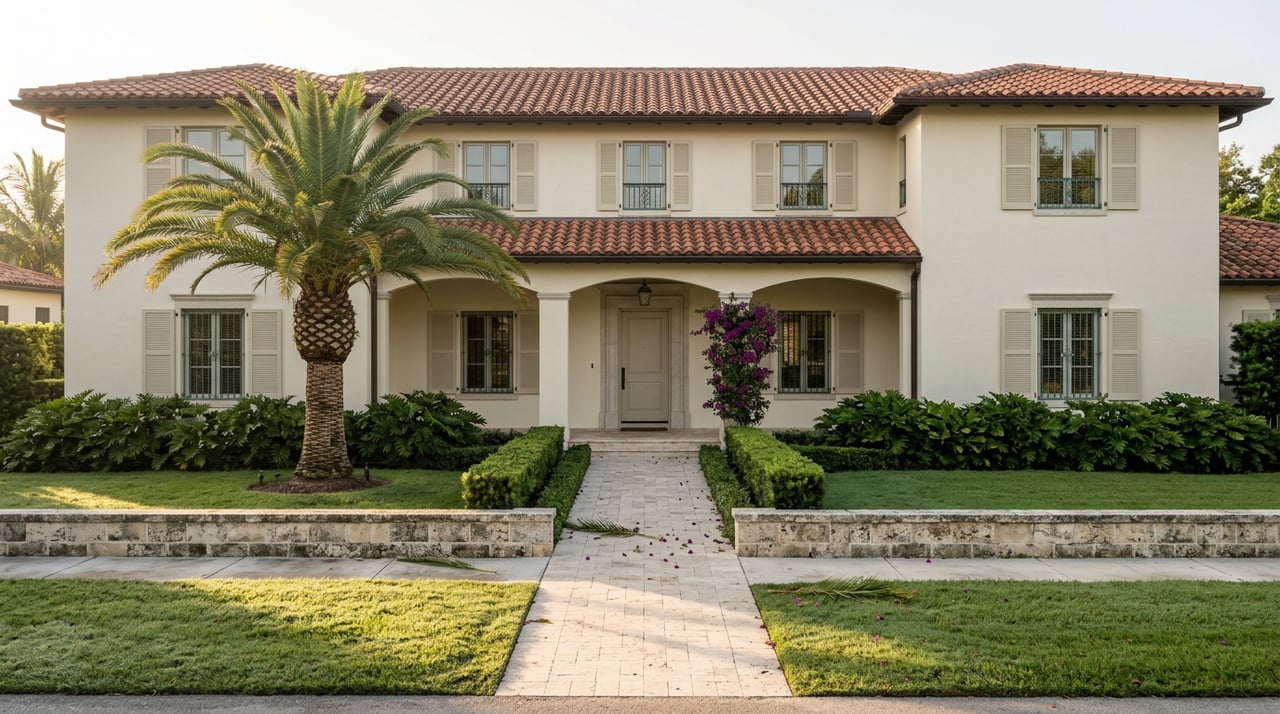
A four-thousand-square-foot estate on SW 74th Avenue went under contract in three days this year, at full asking price of $2,485,000. No negotiation, no repairs credit, no back-and-forth. That kind of clean, fast close is exactly what most sellers hope for and rarely get. But in Palmetto Bay right now, it is not the exception. It is the pattern at the top of the market, and it runs in the opposite direction from what most people assume about pricing a home.
The common wisdom says higher price points are harder to move. Fewer buyers can afford them, so sellers should expect longer waits and more negotiation. Palmetto Bay's last six months of closings say otherwise. The village's housing market has split by price tier, and the split cuts against intuition: the more a home costs, the cleaner the sale.
What the Last Six Months Actually Show
An analysis of 134 closed sales tracked through the Miami Association of Realtors over the trailing 180 days into mid-2026 makes the pattern hard to miss. Every single home that sold between $2 million and $3 million closed without a price reduction. Not one dollar negotiated off the original ask. Six homes closed in that band, with a median of 26 days on market and an average sale-to-list ratio of 95.2 percent.
Compare that to the entry tier. Fifty-one percent of homes that sold under $1 million needed at least one price cut before finding a buyer. In the $1 million to $2 million range, the most active segment in the village and the source of more than half of all transactions, 43 percent needed the same. Correctly priced homes in that middle band still moved well, closing in 39 days or fewer, but getting the number right the first time mattered far more than it did for the luxury tier above it.
The obvious explanation, that expensive homes just sit longer because the buyer pool is thinner, does not hold here. What actually happens is closer to this: at the entry and mid tiers, buyers are comparison shopping against a wide, imperfectly priced set of listings, and sellers who misjudge the market get tested for it. At the top, the buyer has usually already narrowed the field before they walk in, and when the home is right, they do not haggle over a number they have already decided is fair.
Old Cutler Road Is Setting a New Ceiling
Four homes closed above $3 million in the same six-month window. Setting aside one outlier, the remaining three averaged 46 days on market, still faster than the entry tier below them. Two of those three were new construction on Old Cutler Road, closing at $5.8 million and $6.2 million, with price per square foot landing between $799 and $934. That is a new benchmark for the corridor, and it is not slowing down. Three more new construction listings on the same stretch are currently asking up to $9,495,000.
On the waterfront side, two Paradise Point listings are pending at $3,499,000 and $6,500,000, with price per square foot above $1,100. That pocket is trading in a different register entirely from the rest of the village, and it is worth watching separately rather than folding into a single Palmetto Bay average.
Here is how the tiers actually break down over the same period:
| Price Band | Share of Closings | Price Cut Rate | Median Days on Market |
|---|---|---|---|
| Under $1M | Largest segment by count | 51% needed a cut | Slower, more variable |
| $1M to $2M | More than half of all sales | 43% needed a cut | 39 days or fewer when priced right |
| $2M to $3M | Six closings | 0% needed a cut | 26 days |
| $3M+ (excl. outlier) | Three closings | Data limited | 46 days |
The takeaway is not that expensive homes are magically easier to sell everywhere. It is that in Palmetto Bay specifically, the top of the market is thin enough and well-informed enough that pricing discipline at the low end matters more, not less, than it does at the high end.
The Pinecrest Math Buyers Have Already Done
Part of why luxury buyers move decisively once they find the right home in Palmetto Bay is that they have already run the comparison against the neighborhood next door. Palmetto Bay currently trades at roughly $616 per square foot against Pinecrest's $900 and up, a 30 to 40 percent gap for comparable homes. A buyer shopping at the $2 million-plus level has typically toured both markets, seen the price difference in person, and concluded the value is real rather than a fluke of one listing.
That value gap is easier to accept when the lifestyle case is visible on the ground. Coral Reef Park's new recreation center and pickleball courts opened on March 7, 2026, adding a five-thousand-square-foot hub for classes, gatherings, and the kind of everyday programming that signals ongoing village investment rather than a neighborhood coasting on its reputation. A few minutes away, the Deering Estate continues its Artist-in-Residence program, with this year's cohort including photographers Tony Fernandez and Josh Aronson and sculptor Emily Peters, alongside its mangrove trails and Biscayne Bay frontage. Buyers weighing Palmetto Bay against Pinecrest are not just comparing price per square foot. They are comparing two versions of the same lifestyle, and Palmetto Bay's version now comes with a meaningfully lower entry cost and a village that keeps adding to what it offers.
What This Means If You're Pricing a Home This Fall
If you own a home under $1 million, the data says price it with room from the start. Just over half of recent sales in that tier needed a correction, and buyers here are comparing you against a wider, more price-sensitive field. A home listed with realistic expectations from day one avoids the two-cut pattern that eats into both time and final price.
If you are in the $1 million to $2 million range, precision matters more than aggression. Homes priced correctly for the current market closed in 39 days or fewer. Homes priced for last year's comps sat, then discounted, then sat again.
If you are selling above $2 million, especially new construction on Old Cutler Road or waterfront at Paradise Point, the recent closings suggest buyers at that level already know what they are looking for and what it is worth. That does not mean every ask holds. It means a well-prepared, accurately priced luxury listing in this village is now closing faster and cleaner than the market below it, a reversal that most sellers, and more than a few agents, have not caught up with yet.
A Few Common Questions
Does a price above $2 million guarantee a fast, full-price sale in Palmetto Bay? No single price point guarantees an outcome. The recent data reflects six closings in that band over 180 days, a meaningful pattern but a small sample. What it does show is that buyers shopping at that level in this village are arriving prepared and are not treating negotiation as the default.
Is the sub-$1 million segment weak, or just more competitive? More competitive is the more accurate read. The segment is still active and remains a large share of village sales. It simply rewards precise pricing more consistently than the tiers above it, because buyers there have more comparable inventory to weigh a listing against.
Why is Old Cutler Road specifically pulling ahead on price per square foot? The corridor's recent new construction closings, at $799 to $934 per square foot, reflect both the scale of the lots and a run of genuinely new product entering a street that previously had little of it. Additional listings asking up to $9,495,000 suggest builders believe that trajectory continues, though whether the market fully supports those numbers is still an open question worth watching closing by closing.
If you are weighing where your home sits in this split market, or trying to price a Palmetto Bay listing against what is actually closing rather than what is asking, the Cromer Team can walk through the comparable closings with you directly. Request a Private Consultation to talk through your specific street, price band, and timeline before you list.