Wondering whether a historic home in Coral Gables is a dream purchase or a demanding commitment? The truth is, it can be both. If you love architecture, legacy, and the kind of details newer homes rarely replicate, owning one of these properties can be deeply rewarding. This guide will help you understand what to expect, what to plan for, and how to think through the decision with confidence. Let’s dive in.
Why Coral Gables Historic Homes Stand Out
Coral Gables has a strong historic identity that still shapes the city today. Built rapidly in the 1920s under George Merrick, the city continues to describe itself as a City Beautiful and Garden City, with historic landmarks, mature streetscapes, and a distinct architectural presence.
More than 1,000 properties are listed on the Coral Gables Register of Historic Places. That means historic ownership here is not a niche experience. It is a meaningful part of the city’s residential fabric and a major reason many buyers are drawn to Coral Gables in the first place.
Historic character in Coral Gables goes well beyond one look or one era. The city’s well-known resources include City Hall, Merrick House, the Biltmore Hotel, Venetian Pool, and the MacFarlane Residence, while themed areas such as the Dutch South African and Chinese villages show how varied the built environment can be.
What Gives These Homes Their Character
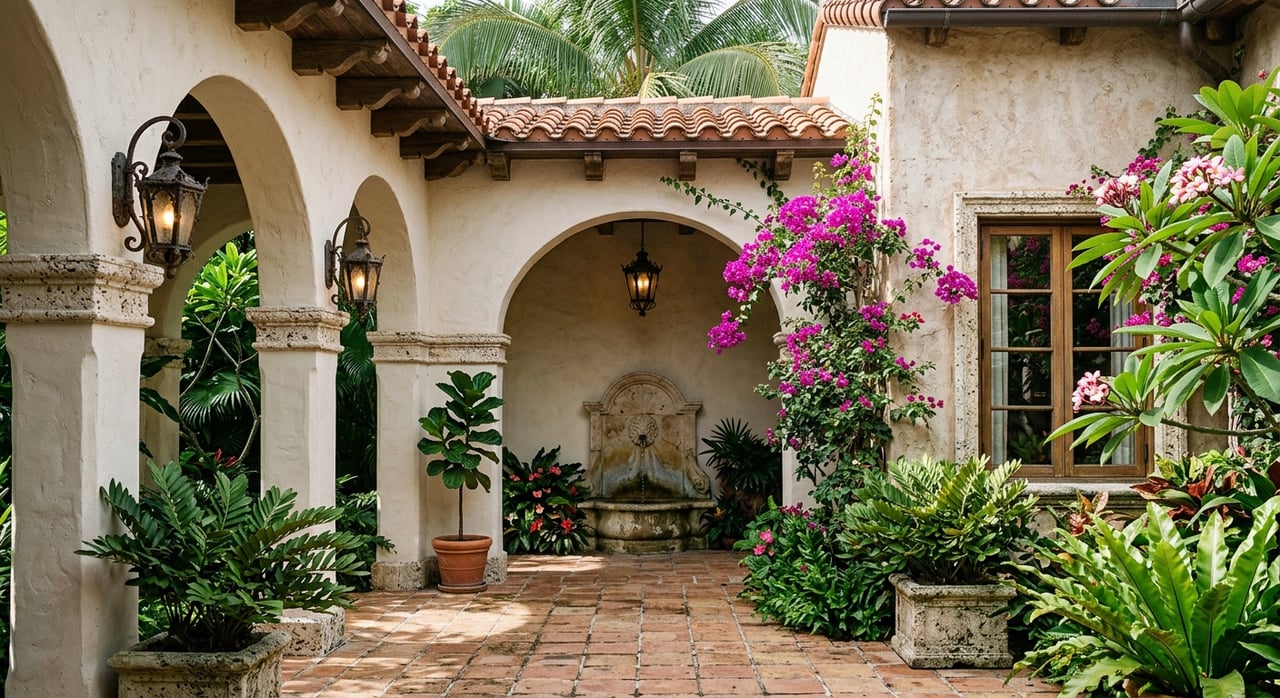
Many historic Coral Gables homes are prized for original materials and design features that are difficult to duplicate today. The city identifies details like coral rock and stucco walls, barrel tile roofs, clay vents, double-leaf wooden doors, loggias, courtyards, and ornamental elements as important parts of period character.
Windows also matter more than many buyers expect. In the city’s preservation guidance, windows are treated as especially important to a home’s historic identity. Changes such as replacing period windows with incompatible types, changing the roof pitch, or enclosing loggias or porte-cocheres can cause lasting damage to the original character.
For buyers, that means you are not just purchasing square footage. You are often stepping into a home with design elements that carry architectural and historical value, and that value usually depends on thoughtful stewardship.
Expect a Different Ownership Mindset
Owning a historic home in Coral Gables is usually less about starting fresh and more about caring for what is already there. The city defines preservation as ongoing maintenance of historic building materials and vegetation, which gives you a good sense of the ownership mindset these properties require.
In practical terms, that often means a repair-first approach. Instead of removing older features simply because they show age, the focus is usually on maintaining, stabilizing, and restoring them when possible.
That can feel very different from owning a newer home. If you are someone who values craftsmanship and authenticity, this approach may feel rewarding. If you want total design freedom with minimal constraints, it may feel more involved than you expected.
Maintenance Can Be More Hands-On
Historic homes often require more active upkeep than newer construction. The features that make them beautiful are often the same features that need closer monitoring, especially in South Florida’s moisture-heavy climate.
Historic stucco, for example, is particularly vulnerable to water damage and should usually be repaired by an experienced plasterer. Historic clay tile roofs are also fragile and need special care. Historic wood windows should typically be repaired and retained whenever possible, with replacement considered only when deterioration makes repair impractical.
That maintenance mindset often extends beyond the main structure. In Coral Gables, landscape features such as courtyards, fences, trees, sidewalks, plantings, gates, street furniture, and exterior lighting may also be treated as part of a property’s historic character.
Renovations Usually Involve Review
If a property is locally designated or is a contributing property within a historic district, Coral Gables requires historic-preservation review before most exterior work begins and before a building permit can be issued. This is one of the most important things to understand before you buy.
Some projects may qualify as ordinary maintenance and not require Certificate of Appropriateness review. However, alterations, additions, demolitions, and new construction generally do require review. Even noncontributing properties within historic landmark districts may still be reviewed for exterior alterations and related work.
This does not mean renovation is impossible. It means renovation usually works best when it starts with a clear understanding of the city’s process and standards.
How Coral Gables Evaluates Changes
Coral Gables evaluates design changes using the Secretary of the Interior’s Standards for Rehabilitation. At a local level, the city’s standards emphasize repair over replacement and compatibility over imitation.
For example, deteriorated historic features should generally be repaired rather than replaced. New additions should be compatible in scale, massing, and materials, but still differentiated from the original building. Harsh cleaning methods such as sandblasting should not be used.
For homeowners, this often leads to a practical strategy:
- Repair original features first when feasible
- Replace in kind when repair is no longer practical
- Document window and roof repair needs carefully
- Plan additions on secondary elevations when possible
- Avoid design moves that overpower the original facade
Timelines May Be Longer Than Expected
Historic ownership can come with more review steps, and that often affects timing. If you are planning exterior updates, an addition, or major rehabilitation work, it is wise to expect a more layered process than you might see with a non-historic property.
That extra time is not necessarily a negative. In many cases, it protects the long-term value and integrity of the home and its setting. Still, if your move-in or renovation timeline is tight, this is something to discuss early in your search.
For remote buyers and relocations, timeline clarity matters even more. Understanding the likely review path at the front end can help you make a better purchase decision and avoid surprises after closing.
There May Be a Local Tax Incentive
Coral Gables offers a local ad valorem tax exemption program for approved rehabilitation and maintenance work on historic properties. This incentive is designed to encourage preservation-minded investment, but it is not automatic and it is not a blanket tax break.
The process requires preconstruction approval, post-construction documentation, and additional review at both the city and county level. In other words, timing and paperwork matter.
If this incentive is relevant to your plans, it is worth factoring into your decision-making before work begins. Historic ownership often rewards buyers who plan carefully rather than react later.
Historic Homes vs. Newer Luxury Homes
For many buyers in Coral Gables, the real question is not whether historic homes are appealing. It is whether they are the right fit for your lifestyle, priorities, and tolerance for oversight.
Historic homes usually offer stronger architectural character, richer original materials, and a deeper sense of place. In exchange, you can expect preservation rules, longer review timelines, and a greater chance of specialized maintenance.
Newer luxury homes often provide more contemporary layouts and fewer historic-preservation constraints. That said, newer development in Coral Gables is not entirely free from design oversight. The city’s Board of Architects reviews many applications to evaluate compatibility in color, materials, fenestration, and proportion, and some submissions and demolition permits require a tree survey and tree protection plan.
Here is a simple comparison:
| Consideration | Historic Home | Newer Luxury Home |
|---|---|---|
| Architectural character | Often highly distinctive | Often more contemporary |
| Original materials | Common and valued | Less central to ownership |
| Exterior changes | Often require preservation review | May still face city design review |
| Maintenance style | Repair-first, specialist work more likely | Typically more straightforward |
| Layout flexibility | Often more limited | Usually more flexible |
Who Historic Ownership Fits Best
A historic home in Coral Gables can be an excellent fit if you value authenticity and see yourself as a steward of a distinctive property. Buyers who appreciate original windows, tile roofs, courtyards, and handcrafted details often find that the ownership experience matches what they love about the home.
It may also suit you if you are comfortable with planning, patient decision-making, and working within established guidelines. Historic ownership tends to reward buyers who understand that preserving character is part of the value proposition.
If your top priority is a highly customizable home with fewer review steps, a newer property may be a better match. Neither choice is inherently better. The right answer depends on how you want to live and what kind of home experience you want to create.
What to Ask Before You Buy
Before purchasing a historic home in Coral Gables, it helps to ask focused questions early. Doing so can clarify both the opportunity and the commitment.
Consider asking:
- Is the property locally designated or located in a historic district?
- Is it considered a contributing property?
- Which exterior features are especially important to preserve?
- What past repairs or alterations have been completed?
- Are there pending maintenance issues involving stucco, roof tiles, or wood windows?
- What kinds of future updates would likely require review?
- Could planned rehabilitation work qualify for the local ad valorem tax exemption process?
These questions can help you evaluate not just the beauty of the home, but the practical side of ownership as well.
Owning a historic home in Coral Gables can be a meaningful and rewarding choice when you go in with clear expectations. The charm is real, but so is the responsibility. If you want thoughtful guidance as you compare historic properties, newer homes, or a relocation move into Coral Gables, the Cromer Team offers discreet, concierge-level support tailored to your goals.
FAQs
What makes a Coral Gables home historic?
- In Coral Gables, historic significance may relate to local designation, inclusion on the Coral Gables Register of Historic Places, or location within a historic district, along with preserved architectural features and materials.
Do historic homes in Coral Gables require approval for renovations?
- Yes, locally designated properties and contributing properties in historic districts generally require historic-preservation review before most exterior work begins and before a permit is issued.
What exterior features matter most on historic Coral Gables homes?
- Common character-defining features include stucco and coral rock walls, barrel tile roofs, clay vents, wooden doors, loggias, courtyards, ornamental details, and period windows.
Are windows important in a Coral Gables historic home?
- Yes, the city treats windows as especially important to historic character and generally favors repair and retention over incompatible replacement.
Is maintenance harder on a historic home in Coral Gables?
- Historic homes often require more hands-on maintenance, especially for stucco, clay tile roofs, wood windows, and landscape elements that contribute to historic character.
Are there tax benefits for historic home improvements in Coral Gables?
- Coral Gables has a local ad valorem tax exemption program for approved rehabilitation and maintenance work, but it requires preconstruction approval, documentation, and city and county review.